 is a new
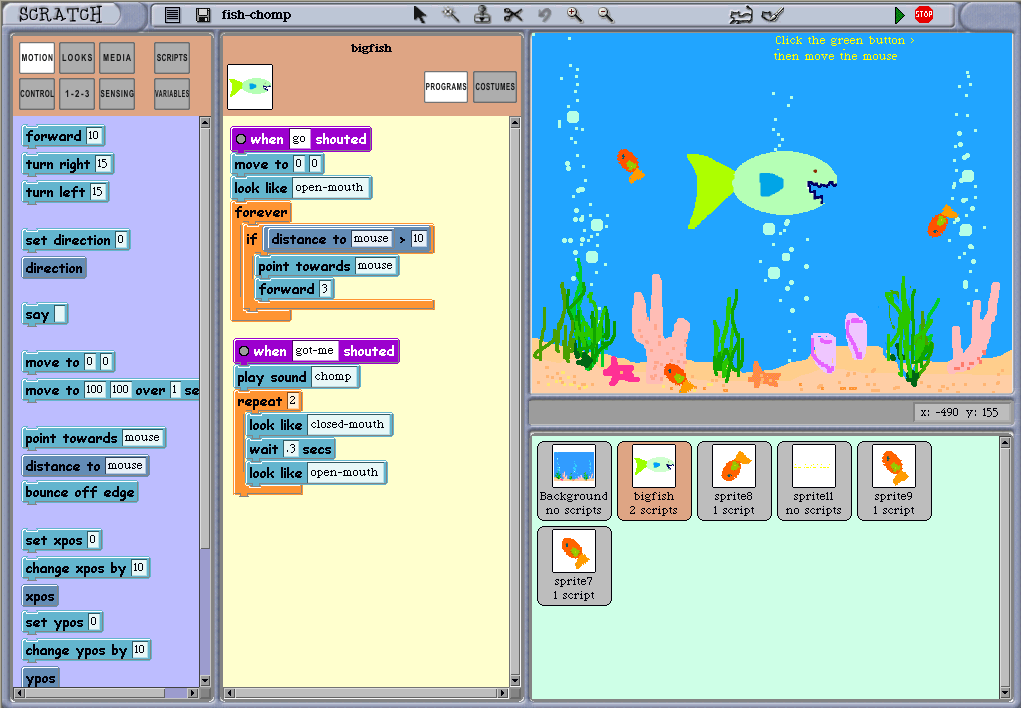
programmable toolkit that enables kids to create their own games, animated
stories, and interactive art -- and share their creations with one another
over the Net. Scratch builds on the tradition of Logo and LEGO/Logo, but
takes advantage of new computational ideas to make it easier to get
started with programming (lowering the floor) and extend the range of what
kids can create and learn (raising the ceiling). is a new
programmable toolkit that enables kids to create their own games, animated
stories, and interactive art -- and share their creations with one another
over the Net. Scratch builds on the tradition of Logo and LEGO/Logo, but
takes advantage of new computational ideas to make it easier to get
started with programming (lowering the floor) and extend the range of what
kids can create and learn (raising the ceiling).
|
 |
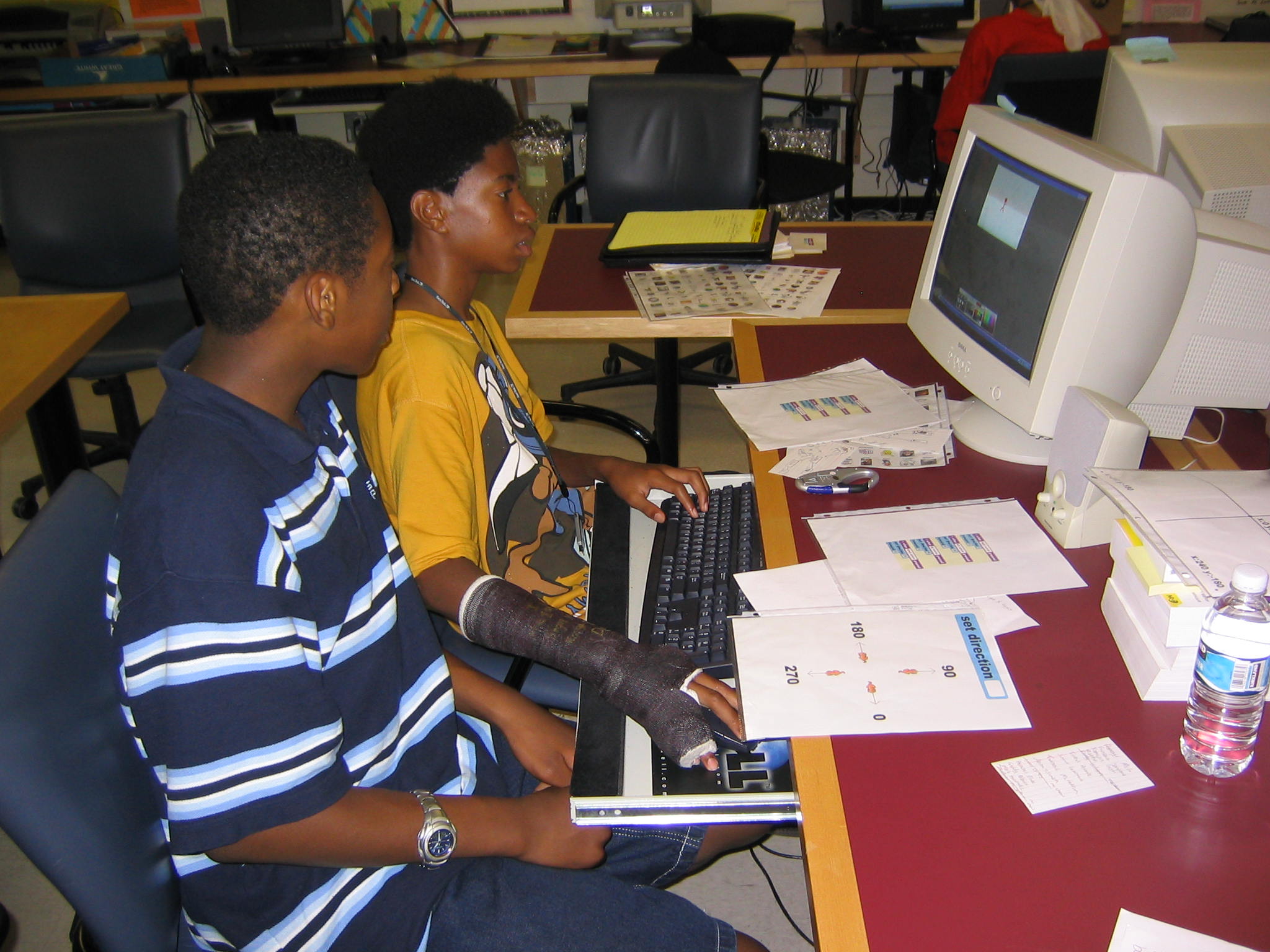 |
Scratch is designed especially for youth at Computer Clubhouses, an international network of after-school centers in low-income communities. The Scratch project aims to create a programming culture at Computer Clubhouses, empowering youth (ages 10-16) to express themselves fluently and creatively with new technologies. |
|
Scratch is being developed by the Lifelong Kindergarten research group at the MIT Media Lab, in collaboration with KIDS research group at the UCLA Graduate School of Education & Information Studies. Scratch builds on the Squeak
programming language, Publications Resnick, M., Kafai, Y., Maeda, J., et al. (2003). A Networked, Media-Rich Programming Environment to Enhance Technological Fluency at After-School Centers in Economically-Disadvantaged Communities. Proposal to National Science Foundation. Maloney, J., Burd, L., Kafai, Y., Rusk, N., Silverman, B., and Resnick, M. (2004). Scratch: A Sneak Preview. Second International Conference on Creating, Connecting, and Collaborating through Computing. Kyoto, Japan, pp. 104-109. Feinberg, D. (2004). Broadcast-Based Communication in a Programming Environment for Novices. Masters Thesis, MIT. The Scratch project supported by a grant from Any opinions, findings, and conclusions or recommendations expressed on this site are those of the authors and do not necessarily reflect the views of the National Science Foundation. |